How to Maintain Your Concrete Driveway in North Texas Heat
A concrete driveway in Sansom Park is a long-term investment — properly maintained, it should last 25–40 years. Neglected, the same driveway can show significant deterioration within 10 years. The difference usually comes down to a few maintenance practices that most homeowners either don’t know about or put off until it’s too late. In this guide, we cover the concrete driveway maintenance practices that matter most in North Texas, with specific attention to the conditions Sansom Park driveways face: expansive clay soil beneath, triple-digit summer heat above, and occasional winter freeze-thaw cycles in between.
We’ll cover sealing, crack repair timing, cleaning, drainage maintenance, and the seasonal schedule that keeps a Tarrant County driveway in top condition.
Need Concrete Maintenance or Repair in Sansom Park?
Sansom Park Concrete handles everything from sealing to full driveway repair. Free estimates.
Why Maintenance Matters More in Sansom Park Than in Other Climates
Concrete is porous. Water enters through micro-cracks, surface pores, and control joints. In a stable climate, that water mostly evaporates without causing damage. In North Texas, water beneath a driveway feeds the expansive clay, which expands against the slab. Water that enters through surface cracks in winter can freeze and physically break the concrete from the inside out. UV radiation in the 228-day Sansom Park sunshine year breaks down the cement paste at the surface, causing gradual scaling and weakening.
Sealing — the most important maintenance step — closes the surface pores and keeps water out. A sealed driveway resists water infiltration, resists UV degradation, and resists the oil and chemical staining that makes older driveways look worn. The cost of sealing every 3–5 years is trivial compared to the cost of driveway replacement accelerated by neglect.
Sealing: The Highest-Impact Maintenance Step
Concrete sealers fall into two main categories: penetrating sealers (silane-siloxane) and film-forming sealers (acrylic or epoxy).
Penetrating sealers soak into the concrete surface and chemically react with the cement to fill pores from within. They don’t change the surface appearance significantly — the driveway looks nearly the same after application. They protect against water, salt, and chemical penetration. Lifespan: 5–10 years.
Film-forming sealers coat the surface with a thin film that either provides a clear finish or adds gloss. Acrylic sealers are common for decorative concrete; they require reapplication every 2–3 years in North Texas UV conditions but provide good color protection for stamped surfaces.
For a plain broom-finish driveway in Sansom Park, a penetrating silane-siloxane sealer applied every 3–5 years is the recommended maintenance approach. It’s inexpensive ($30–$60 for a 200 SF driveway in materials), requires little surface preparation for the initial application, and provides meaningful protection against the conditions that shorten driveways in Tarrant County.
Crack Repair: Act Early, Save Money
The time to repair a crack is when it’s still narrow — under 1/4” wide. At this size, a flexible polyurethane crack filler applied to a clean, dry crack seals the joint and prevents water from reaching the base material and the clay beneath. Cost: under $50 in materials for a typical residential driveway.
Ignored, that same crack widens as clay movement continues, allows water to undermine the base, and eventually requires either partial replacement or — if multiple cracks have reached this stage — full driveway replacement. The $50 repair that was skipped leads to a $7,000+ replacement.
Inspection schedule: walk your driveway in spring (after winter freeze-thaw) and fall (before winter). Look for new cracks or existing cracks that have widened. Fill any crack over 1/8” promptly. See our guide on when a driveway needs replacing vs. repair for the thresholds where repair stops being cost-effective.
Cleaning: Remove Stains Before They Set
Oil and fuel stains from vehicles are the most common driveway stain in residential use. Fresh oil stains can be absorbed with cat litter or commercial absorbent, then cleaned with degreaser and a stiff brush. Set stains require more aggressive treatment — alkaline degreasers, pressure washing, or poultice application. Rust stains from metal furniture or tools require an oxalic acid-based cleaner. Organic stains (algae, mold) common in shaded areas respond to diluted bleach solution.
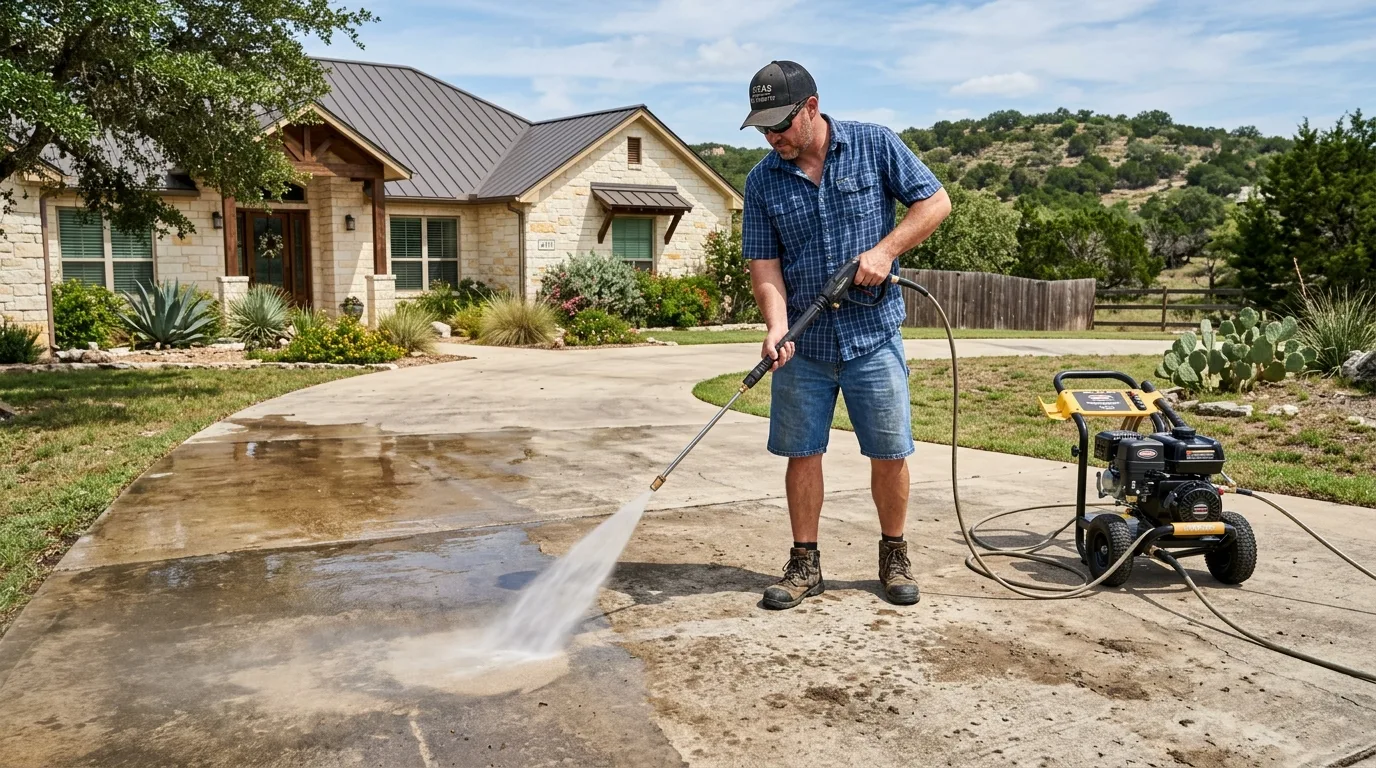
Pressure washing at 2,500–3,000 PSI is appropriate for concrete driveways — adequate to clean thoroughly without damaging the surface. Higher pressure can pit and erode unsealed concrete.
Annual cleaning before sealer application is the recommended schedule. Never apply sealer to a dirty or damp surface — the sealer won’t bond properly and will peel prematurely.
Schedule Driveway Maintenance in Sansom Park
We handle sealing, crack repair, and resurfacing. Get a free maintenance assessment for your Sansom Park driveway.
Drainage Maintenance: Protect the Base
Sansom Park’s clay soil is the reason drainage is critical. Water that pools near or under your driveway accelerates clay expansion, which eventually leads to heaving and cracking. Keep these drainage maintenance tasks on your annual checklist:
- Clear debris from any drainage channels adjacent to the driveway
- Check that the driveway slope is still directing water away from your home (minimum 1/8” per foot fall)
- Ensure downspouts direct water well away from the driveway edge
- Look for areas where soil has settled against the driveway edge, creating a water trap
If pooling near the driveway is consistent, addressing it with French drain installation or regrading may prevent future concrete damage worth far more than the drainage fix.
Seasonal Maintenance Schedule for Sansom Park Driveways
Spring (March–April):
- Post-winter inspection — check for new freeze-thaw cracks
- Fill any cracks found during inspection
- Clean the driveway surface thoroughly
- Apply sealer if it’s been 3–4 years since last application
Summer (May–August):
- Limit parking heavy vehicles in the same spot during peak heat (concrete can creep slightly under sustained load in extreme heat)
- Address oil drips promptly before heat bakes them in
- No sealer application recommended during July–August heat — 50–90°F is the appropriate application window
Fall (September–November):
- Second cleaning and inspection before winter
- Ideal window for sealer application if not done in spring
- Ideal time for any crack repair before winter freeze
Winter (December–February):
- Avoid using de-icing salt on concrete driveways — calcium chloride and sodium chloride accelerate surface scaling in freeze-thaw conditions. Use sand for traction instead.
- Snow and ice removal with plastic shovels rather than metal blades that can score the surface
Cost Factors
DIY sealing: $30–$100 in materials depending on area. Professional sealing service: $0.25–$0.50/SF, or $125–$260 for a standard 520 SF driveway. Professional crack repair: $5–$15 per linear foot depending on crack width and depth. Professional cleaning and sealing combined: $0.50–$0.75/SF.
For larger maintenance needs — resurfacing, partial replacement, or repairs after clay soil movement — see our concrete repair service page.
Frequently Asked Questions
How often should I seal my concrete driveway in Sansom Park?
For a plain broom-finish driveway with a penetrating sealer, every 3–5 years is appropriate. For stamped or decorative concrete with a film-forming acrylic sealer, every 2–3 years is recommended given North Texas UV intensity. The test: pour a small amount of water on the surface. If it beads up, the sealer is still performing. If it absorbs quickly, it’s time to reseal.
Can I seal a concrete driveway myself in Sansom Park?
Yes, for standard broom-finish concrete. Apply penetrating silane-siloxane sealer to a clean, dry surface using a pump sprayer or roller. The main mistakes are applying to dirty concrete, applying in direct sunlight during summer heat, and applying too thickly. Read product instructions for the specific sealer; application rates and drying times vary.
Does sealing prevent all concrete cracking in North Texas?
Sealing prevents water infiltration, which is one cause of crack widening and base erosion. But sealing alone doesn’t prevent the clay soil movement that is the primary cause of concrete cracking in Sansom Park. Proper base preparation at the time of installation is the only way to meaningfully reduce clay-related cracking. Sealing is maintenance, not a substitute for proper installation.
Related reading: concrete repair guide for Sansom Park | concrete cost in Sansom Park | clay soil and concrete driveways
Concrete Maintenance and Repair in Sansom Park
Sealing, crack repair, resurfacing — Sansom Park Concrete keeps your concrete performing for the long term.