Concrete Repair vs. Replacement: What Sansom Park Homeowners Need to Know
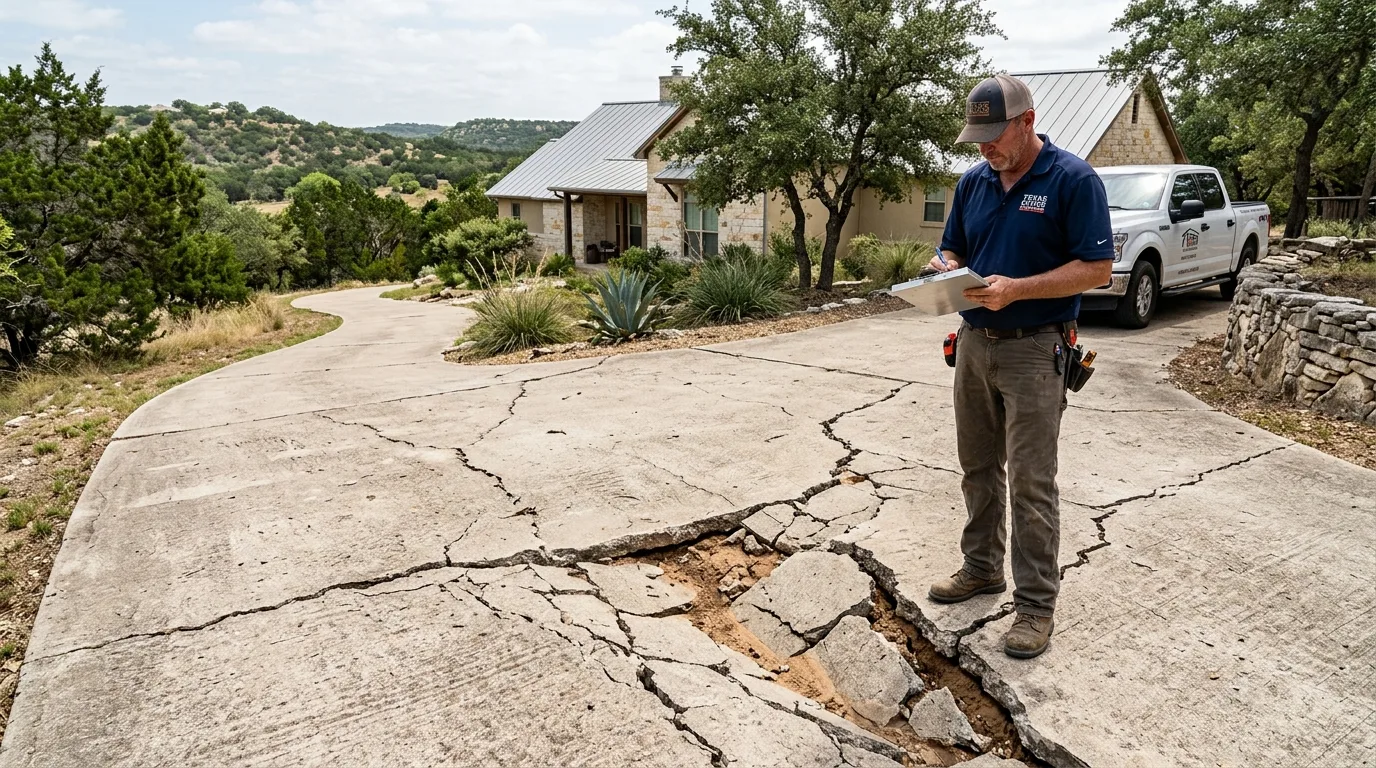
The repair vs. replacement decision is the first question contractors in Sansom Park hear from homeowners who notice their concrete driveway or patio showing signs of wear. It’s also the question most likely to be answered dishonestly — contractors who primarily do replacement work will recommend replacement; those who primarily do repair will recommend repair. The answer should be based on the actual condition of the concrete and the underlying cause of the damage, not on what’s more profitable for the contractor.
In this guide, we give you a framework to evaluate your own concrete’s condition, understand when repair is genuinely the right call, and recognize the conditions where replacement is the only path to a lasting result. We’ll also cover cost comparisons so you can evaluate whether a quoted repair is cost-effective relative to full replacement.
Not Sure If You Need Repair or Replacement in Sansom Park?
Sansom Park Concrete provides free, honest assessments — we'll tell you what we see and give you both options.
Why the Decision Is More Complex in Sansom Park
The repair vs. replacement decision anywhere depends on the extent and type of damage. In Sansom Park, it’s complicated by one factor that dominates most concrete failures in Tarrant County: Houston Black Clay.
When clay soil is the underlying cause of cracking and settlement, surface repair addresses the symptom without touching the cause. A crack fill over clay-damaged concrete will look fine for 1–2 years before the same clay movement reopens the crack. A resurfacing overlay over a slab that’s still moving will reflective-crack within a year or two. This is why the repair vs. replacement question in Sansom Park always needs to include the question: is the underlying clay still active, and was it ever properly mitigated?
If the answer is that clay movement is ongoing and was never addressed with proper base preparation, the honest recommendation is often replacement — done correctly this time with a 4–6” compacted gravel base, rebar reinforcement, and adequate control joints.
When Repair Is the Right Call
Isolated surface cracking (under 15% of slab area): Hairline to 1/4” cracks that have been stable (not growing for 6+ months) and are confined to the surface layer are good candidates for crack fill. Clean the crack with a shop vac or compressed air, apply a flexible polyurethane or epoxy crack filler, and match the surface finish if desired.
Surface spalling under 20% of area: Shallow spalling (the top 1/4” layer flaking away) can be repaired with polymer-modified mortar or a thin resurfacing overlay, provided the underlying slab is structurally sound and drainage is adequate.
Minor settlement under 1/4”: Sections that have settled less than a quarter inch can often be leveled with mudjacking (pumping grout beneath the slab) or polyurethane foam injection. These methods are less invasive than replacement and cost-effective for limited settlement.
Well-installed concrete with cosmetic wear: Driveways and patios that were originally installed correctly — on adequate base material with proper reinforcement — but have surface wear from 20–30 years of use may be candidates for resurfacing overlay. The key test: is the slab structurally intact and are there no voids beneath it?
When Replacement Is the Right Call
Full-depth cracking across more than 25% of the slab: At this point, the cost of crack repair approaches replacement cost, and the underlying cause (typically clay movement or base failure) hasn’t been addressed. Replacement with proper base prep is the more cost-effective long-term decision.
Settlement over 1” between sections: Significant differential settlement indicates base failure, not just surface damage. Mudjacking over a failed base is a temporary fix; replacement with proper base reconstruction is the permanent solution.
Voids beneath the slab: If the slab moves or flexes underfoot, there’s a void beneath it — the slab is unsupported. This is a structural failure condition. Void filling buys time; it doesn’t fix the clay-movement root cause.
Slab over 30 years old with multiple failure conditions: As outlined in our 5 signs your driveway needs replacing guide, older slabs with compounding problems are typically better candidates for replacement.
Ongoing clay movement: If drainage issues are causing repeated saturation of the clay beneath the slab, the clay will continue to expand and contract until drainage is corrected. Repair on an active-movement slab is temporary.
Get an Honest Assessment of Your Sansom Park Concrete
We'll inspect your driveway or patio and give you a clear recommendation with cost comparison for both options.
Practical Uses: Cost Comparison Framework
The repair vs. replacement decision should always include a cost-per-year analysis:
Example: 520 SF driveway with 30% full-depth cracking and minor settlement
- Repair cost (crack fill + partial leveling): $1,500–$2,500. Estimated life before next repair needed: 2–4 years. Cost per year: $375–$1,250.
- Replacement cost (full removal + new installation with proper base): $8,500–$12,000. Expected life: 25–35 years. Cost per year: $243–$480.
In this scenario, replacement has a lower cost per year over the long term, despite the higher upfront cost. The math tips the other way for minor, isolated issues on a structurally sound slab.
The Process: What an Honest Assessment Looks Like
A contractor performing an honest repair vs. replacement assessment will:
- Probe cracks to determine depth (partial vs. full depth)
- Check for slab movement underfoot (void detection)
- Assess overall settlement across the slab
- Ask about drainage patterns (where does water pool after rain?)
- Ask about the original installation age and what’s known about base preparation
- Provide a written estimate for BOTH options — repair and replacement — so you can make an informed comparison
A contractor who recommends replacement immediately without examining the specific damage, or who recommends repair on a clearly failed slab, may not be giving you an honest assessment.
Cost Factors
Concrete repair in Sansom Park: $3–$7/SF for overlays and patches; $5–$15 per linear foot for crack repair. Concrete replacement: $7–$15/SF installed plus $3–$5/SF for demo and haul-away. For projects where repair cost exceeds 50% of replacement cost with a fraction of the expected life, replacement is typically the better financial decision.
See our full concrete cost guide for Sansom Park for detailed pricing.
Frequently Asked Questions
Can a resurfacing overlay fix cracking on Sansom Park clay?
Resurfacing overlays are a legitimate repair solution when the underlying slab is structurally sound — no significant cracking, no voids, no active settlement. On slabs with active clay movement, a resurfacing overlay will develop reflective cracking within 1–3 years as the underlying slab continues to move. The overlay “repairs” the appearance temporarily without addressing the structural condition.
Is mudjacking or foam injection a good option for settled Sansom Park driveways?
Mudjacking (pumping cementitious grout beneath settled slabs) and polyurethane foam injection are effective for limited settlement (under 1”) where the slab itself is structurally sound. They’re not appropriate for slabs with full-depth cracking or severe settlement — lifting a cracked slab over a failed base doesn’t repair the base. In Sansom Park, these methods work best on slabs where minor settlement has occurred from a specific void (perhaps a dry period dried out a clay pocket beneath), not for widespread clay movement.
How do I know if the original base preparation was adequate in my Sansom Park home?
You may not know without excavation. However, several clues help: if the cracking and settlement appeared within the first 5–10 years, base preparation was almost certainly inadequate. If the problems appeared only after 20+ years of use, the base may have been adequate but has been compromised over time by water infiltration. An experienced contractor can often assess original base quality by examining how and where failures occurred and the pattern of cracking.
Related reading: 5 signs your Sansom Park driveway needs replacing | clay soil concrete guide | concrete repair service page
Repair or Replace? Get a Free Sansom Park Concrete Assessment
We give honest recommendations with cost comparison for both options. No pressure, no upsell.