Why Sansom Park's Clay Soil Matters for Your Concrete Driveway
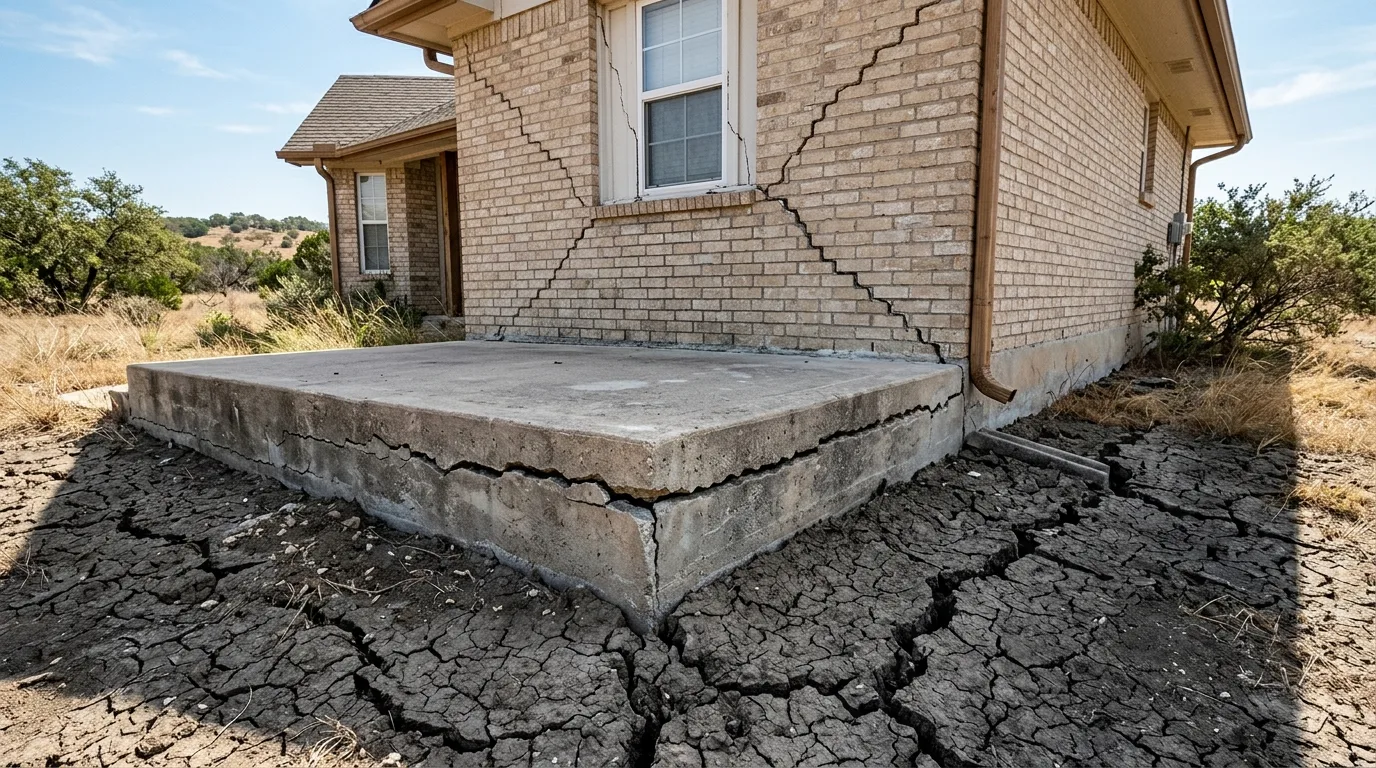
If you’ve watched a driveway or patio in Sansom Park crack, buckle, or shift over a few years, clay soil is usually the reason — not poor concrete or bad luck. Sansom Park and the surrounding Tarrant County area sit on what geologists call Houston Black Clay, an expansive Vertisol soil that behaves differently from sandy or loam soils in ways that directly affect every concrete project in the area. In this post, we cover what that soil does, why it damages concrete, and what a properly prepared concrete job looks like on Tarrant County’s clay ground.
We’ll explain the science behind soil expansion, how it interacts with concrete slabs, what base preparation is actually required, and why some driveways last 30 years while others crack in five.
Building on Sansom Park Clay Soil? Get a Free Assessment
We'll evaluate your site conditions and recommend the right base prep and reinforcement for lasting concrete.
Why Sansom Park’s Clay Soil Matters for Homeowners
Houston Black Clay (Vertisol) is the dominant soil type across most of Tarrant County, including Sansom Park, River Oaks, and White Settlement. What makes it unusual — and problematic for concrete — is its extreme shrink-swell behavior. This soil expands 30–40% in volume when it absorbs water, then contracts and cracks during drought. In North Texas, where the weather swings from spring flooding to summer drought to occasional winter freezes, the soil beneath your driveway or patio can cycle through this expansion and contraction multiple times each year.
When soil expands beneath a concrete slab, the slab lifts. When soil contracts, it pulls away from the slab, leaving voids underneath. Slabs that lack the base preparation and reinforcement to handle this movement will crack along those stress points, often within the first few years. This is the leading cause of foundation damage across Tarrant County — foundation repair companies in the region cite clay soil as the primary driver of repair calls, with costs ranging from $3,500 to $30,000 or more for significant foundation work.
For flat concrete like driveways, patios, and sidewalks, the same mechanism causes the surface cracking and uneven settling that makes otherwise decent-looking concrete look deteriorated in a few years.
What Proper Concrete Base Preparation Looks Like on Sansom Park Clay
The good news is that expansive clay soil is a manageable condition — contractors who work regularly in Tarrant County know what it takes to build concrete that holds up. The bad news is that proper preparation costs more than skipping it, which is why some bids come in significantly lower than others.
Excavation depth: Rather than pouring concrete directly over native clay, proper preparation requires excavating 4–6 inches below the final slab surface to remove soft or loose clay and create room for a stable base material.
Compacted gravel base: A 4–6” layer of crushed limestone or compacted gravel (typically 3/4” crushed stone or road base) is installed and compacted in the excavated area. This layer provides a stable, well-draining base that doesn’t expand with moisture. It also allows water to move away from beneath the slab rather than pooling under it and accelerating soil expansion.
Reinforcement: Wire mesh alone (the minimum standard) provides some crack resistance but isn’t sufficient for heavy-use applications on clay soils. Rebar at 12” on center, placed on chairs at the mid-depth of the slab, dramatically improves tensile strength and prevents cracks from widening even if some movement occurs.
Concrete mix spec: Standard 3,000 PSI concrete is adequate for some applications, but Sansom Park conditions call for 3,500–4,000 PSI concrete with a water-to-cement ratio that prioritizes strength over workability. Higher PSI concrete is less permeable and more resistant to the freeze-thaw cycling that North Texas winters can introduce.
Control joints: Concrete naturally cracks as it cures and as temperatures change. Control joints — saw cuts or tooled grooves placed every 8–12 feet — give the concrete a predetermined place to crack, keeping cracking controlled and out of the middle of slabs where it’s most visible and damaging.
Sansom Park Concrete Done Right
Proper base prep and reinforcement for Tarrant County's clay soil — get a detailed written estimate.
Practical Uses: What This Means for Your Project
- Driveways: 4–5” thickness with rebar and 4–6” compacted gravel base is the standard for lasting driveways on Sansom Park clay. 3” pours over native clay are a recipe for cracking.
- Patios: 4” slabs with wire mesh minimum; rebar recommended for any patio over 200 SF or near structures.
- Sidewalks: 4” with wire mesh, control joints every 4–5 feet in clay-heavy areas.
- Foundations: Engineered post-tensioned or pier-and-beam designs are typically required for Tarrant County’s expansive clay — flat slab on grade without engineering is high-risk.
- Retaining walls: Clay soil pressure behind retaining walls is substantial; walls require proper drainage, deadmen anchors, and typically engineered design for heights over 3 feet.
The Process: How We Handle Clay Soil at Sansom Park Concrete
A proper job on Sansom Park clay starts before the first bag of concrete is mixed. Site evaluation determines whether the native clay is at finished grade or whether soft material needs to be removed. For driveways and patios on residential lots, excavation to a 4–6” base depth is standard. The gravel base is installed, watered, and compacted with a plate compactor or jumping jack — not just raked flat. Forms are set and checked for slope (minimum 1/8” per foot away from structures for drainage). Reinforcement is installed on chairs at the correct height. The pour is scheduled during appropriate temperature windows, and curing compound or wet curing is applied immediately after finishing.
Cost Factors Related to Clay Soil Preparation
A proper base preparation for a Sansom Park driveway adds $1–$2/SF compared to a minimal-prep pour. On a 520 SF driveway, that’s $520–$1,040 in additional cost. That addition is what makes the difference between a 5-year driveway and a 30-year driveway on Tarrant County clay.
See our detailed concrete cost guide for Sansom Park for full pricing ranges by project type, and our guide on when to replace vs. repair your Sansom Park driveway to understand when the damage from skipped prep has already occurred.
Frequently Asked Questions
Can existing concrete on clay soil be repaired, or does it need full replacement?
Surface cracks that haven’t compromised the structural integrity of the slab can often be repaired — crack filling and resurfacing are cost-effective when the base is still stable. But if settling has created elevation differences of more than 1/2”, or if the slab is rocking underfoot (indicating a void beneath), the underlying cause is the clay base, not just the surface. Repair without fixing the base is temporary. See our concrete repair guide for Sansom Park for the full decision framework.
Does every Sansom Park driveway need rebar, or is wire mesh sufficient?
Wire mesh meets minimum code for residential flatwork but is less effective on expansive clay. For driveways, we recommend rebar (at minimum #3 bar at 12” on center) because the vehicle loads combined with clay movement create stress levels that mesh alone doesn’t adequately resist. The cost difference is modest; the longevity difference is significant on Tarrant County soils.
How long does a properly built concrete driveway last on Sansom Park clay?
With 4–6” gravel base, proper reinforcement, and 3,500+ PSI concrete, a driveway on Tarrant County clay should last 25–40 years before needing major repairs. Without proper base prep, expect significant cracking within 5–10 years.
Related guides: concrete cost in Sansom Park | best time to pour concrete in North Texas | foundation repair in Sansom Park
Get a Clay-Soil-Ready Concrete Quote
Sansom Park Concrete builds with Tarrant County's soil conditions in mind. Free written estimates for driveways, patios, and slabs.